Field Camp: The Stuff Nobody Explains Properly Before You Go Outfield

Field camp gets described in very dramatic ways before you go, but the hardest part is usually not one huge event. It is the accumulation of small discomforts.
You are sweaty, damp, tired, sleeping badly, carrying more than you want, and suddenly every simple task feels three times more irritating than it would in camp. That is why the people who cope best are rarely the loudest or most garang. They are the ones who manage small systems well.
If you understand that early, field camp becomes a lot more survivable.
Quick version
- Expect the first night to feel the worst.
- Protect dryness, feet, and setup quality early.
- Stay on top of food, hydration, and admin even when you are tired.
Step 1: Expect the first night to feel worse than the whole camp
The first night is where most recruits mentally wobble.
You are adapting to:
- unfamiliar darkness
- disrupted sleep
- dirt everywhere
- awkward body temperature
- the fact that there is no proper "reset" waiting for you
This matters because people often misread that first wave of discomfort as proof that the whole outfield is going to be unbearable. Usually it is not. Usually the first night is just the hardest adjustment phase.
If the first stretch feels rough, do not over-interpret it.
Step 2: Staying dry is one of the biggest morale multipliers
The field is much easier when you stop dampness from spreading into everything.
Your goal is not to stay perfectly clean. That is unrealistic. Your goal is to protect the items and body areas where moisture causes the most misery.
Focus on:
- keeping critical items in zip bags
- protecting socks and essentials from unnecessary wetting
- changing into dry basics when you realistically can
- using powder before the problem becomes full irritation
This is not being pampered. It is practical damage control. Once you are wet, uncomfortable, and chafing, everything else feels harder.
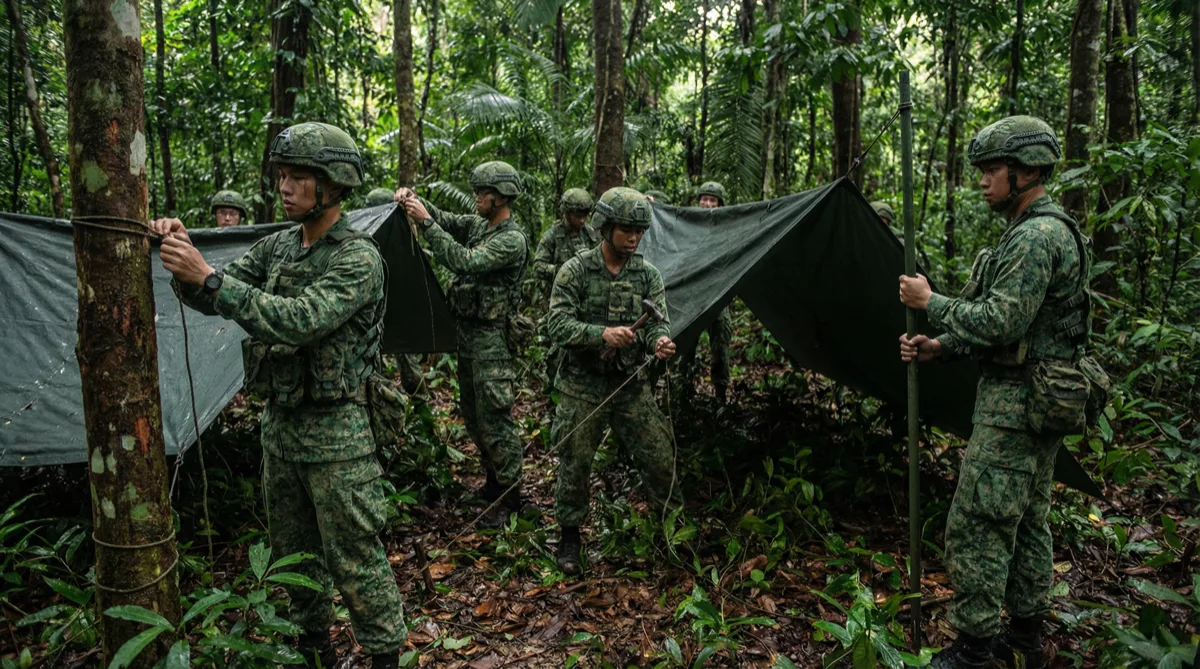
Step 3: Your ground setup decides how bad the night feels
A sloppy setup does not just look bad. It creates hours of avoidable discomfort.
When pitching or settling in, pay attention to:
- how your basha is angled and tightened
- where water might collect if rain comes
- what is under your body
- where your essentials are placed for easy access in the dark
New recruits often think this is minor until the first rough night proves otherwise. A better setup does not make field camp comfortable. It just stops it from becoming worse than necessary.
Step 4: Foot care and small body-admin matter more than "mental strength"
Nobody feels heroic with bad blisters, soaked socks, and constant skin irritation.
That is why basic body-admin matters:
- deal with hotspots early
- do not ignore wet socks for too long
- keep small hygiene habits alive where possible
- sort out chafing before it becomes your whole mood
The field punishes neglect more than weakness. Small preventive actions save much more pain than last-minute toughness.
Step 5: Weapon and personal admin still matter when you are tired
Fatigue makes people lazy with the boring things. That is exactly when the boring things matter more.
Keep your basics squared away:
- know where your rifle is at all times
- keep essential items where you can reach them quickly
- do not get sloppy after movement, rain, or late-night admin
Tiredness is not the problem by itself. Tiredness plus carelessness is.
Step 6: Eat and hydrate even when your appetite disappears
Field camp can kill appetite. Some people stop feeling hungry, or they get too tired to care about food.
That is where bad decisions begin.
If you do not eat and drink enough:
- energy drops faster
- mood gets worse
- the next activity feels harder than it should
You do not need to enjoy every meal. You just need to keep yourself functional. Drink before you feel wrecked. Eat before you tell yourself you are "not that hungry."
Outfield is not the place to prove how little you need. Under-fuelling yourself only makes the whole experience more miserable.
Step 7: Section morale changes everything
Field camp is still tough even in a good section. But a bad section makes everything worse.
The section habits that help most are not glamorous:
- helping each other pitch properly
- reminding one another about admin without acting superior
- keeping complaints funny instead of toxic
- not turning discomfort into sabotage for entertainment
You do not need forced positivity. You just need people who are not actively making a hard environment harder.
Step 8: Recovery starts before you leave the field
A lot of recruits think recovery begins only after they return to camp. In reality, it starts when you stop unnecessary damage from piling up near the end.
That means:
- staying on top of the last bits of admin
- keeping your key items accounted for
- not mentally switching off too early
The better you finish, the easier your transition back becomes.
The simplest field camp survival framework
If you want the shortest version, remember this:
- accept that the first night is usually the worst
- protect dryness and feet aggressively
- set up shelter properly
- keep weapon and personal admin tight
- eat, drink, and help your section stay functional
That is the real survival system. Not magic. Just fewer avoidable own goals.
Related Reads
Related tools
Turn BMT reading into the next practical check
BMT and pre-enlistment pages should move readers into a dated timeline, then health or IPPT checks only when those signals affect the next decision.