NS Vocations Guide for New NSFs

Most people ask about vocations the wrong way.
They ask, "Is this vocation good or bad?" when the more useful question is, "How will this posting change my daily life, expectations, and routine?"
That is why new NSFs often get surprised after BMT. The label sounds familiar, but the actual experience depends on much more than the vocation name alone.
Quick version
- Do not judge your posting only by the vocation label.
- Look at routine, tempo, responsibility, and lifestyle changes.
- Spend the first week learning the pattern before deciding whether the posting is "good."
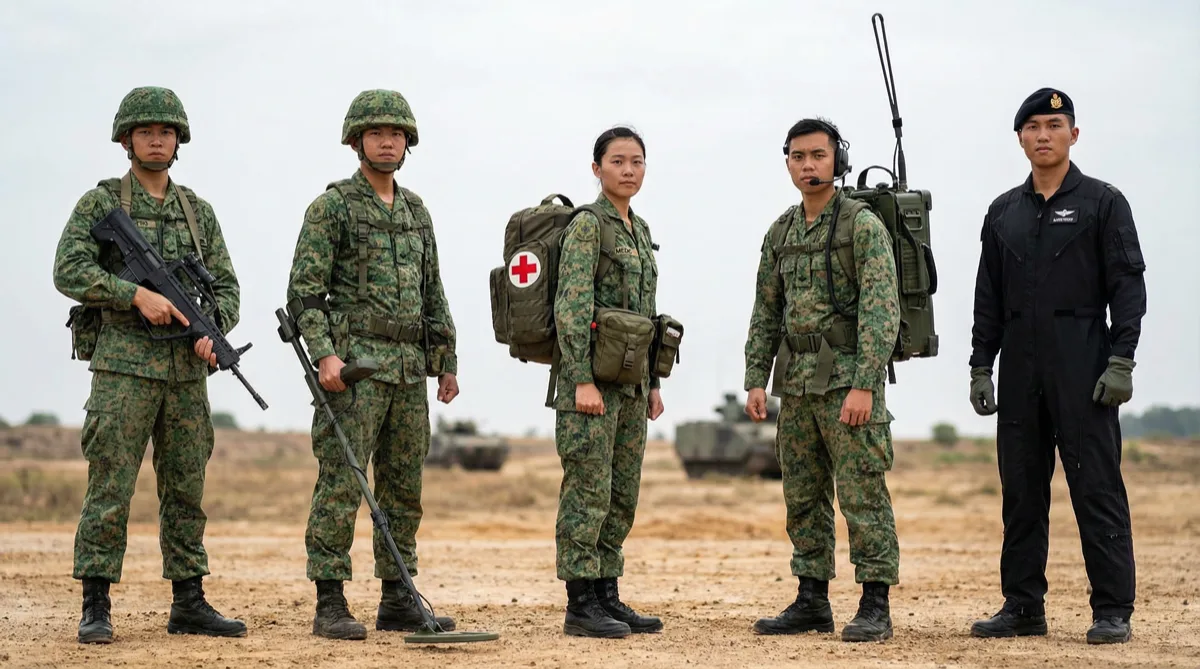
- Combat
- Combat Support
- Service
Usually more physical, more field-heavy, and more training-intensive. Expect tempo and regimentation to matter.
Still operationally important, but the stress often comes from technical work, coordination, and responsibility rather than pure physical grind.
Often less field-centric, but not automatically "easy." Admin accuracy, specialist tasks, or routine discipline can still shape daily life heavily.
Step 1: Think in categories, not prestige
At the broadest level, vocations usually fall into familiar buckets:
- combat roles
- combat support roles
- service or support roles
That classification is useful, but only up to a point. It gives you a rough idea of training intensity and role type. It does not tell you everything that actually affects your week.
The real trap is judging your whole future based on how impressive or unimpressive the name sounds on day one.
Step 2: What changes most is your routine
After posting, the biggest shift is usually not abstract "purpose." It is daily rhythm.
Depending on your vocation or course, you may see changes in:
- stay-in versus stay-out routine
- physical demands
- regimentation level
- admin load
- amount of waiting versus amount of action
- how much responsibility lands on you early
This is why two vocations that sound equally "good" on paper can feel completely different in real life.
Step 3: Combat vocations usually bring intensity and tempo
Combat roles often involve:
- more field exposure
- higher physical expectations
- more tactical or operational training
- a stronger emphasis on discipline and team execution
That does not automatically mean better or worse. It just means the lifestyle is usually more physically demanding and training-heavy.
If you land in a combat vocation, the biggest adjustment is often accepting that the rhythm may stay more demanding for longer than BMT did.
Step 4: Combat support and service roles still shape your NS life heavily
A lot of new NSFs assume that if a role is not frontline combat, it must automatically be relaxed. That is too simplistic.
Combat support and service vocations can still involve:
- unusual schedules
- heavy responsibility
- a lot of admin precision
- course requirements or technical learning
Some people thrive in these roles because the work is structured and specialised. Others find them draining because the stress is different from physical training stress.
The point is not to rank them. The point is to understand that "not combat" is not the same as "nothing much to care about."
Step 5: Ask better questions in your first week
Once you get posted, the useful questions are practical:
- Is this stay-in or stay-out?
- What does a normal week look like?
- What gets people into trouble here?
- What items do I actually need every day?
- Who are the key people I should know?
- Is this a course environment, unit environment, or a mix?
These questions will help you faster than endlessly comparing vocation names in group chats.
Step 6: Do not decide too early whether your posting is "good"
This is the emotional trap after BMT.
You hear where friends are going, compare locations, compare prestige, compare freedom, and form a full opinion before your own posting has even settled.
That almost never helps.
Some vocations sound exciting but become frustrating in practice. Some sound underwhelming but end up stable, meaningful, or surprisingly manageable. Give the environment a little time before declaring victory or disaster.
Step 7: Your job is to learn the pattern first
The best early-posting mindset is not "Do I love this?" It is "How does this place work?"
Focus on:
- routine
- expectations
- standards
- who to approach for what
- what your actual responsibilities are
Once you understand the pattern, the anxiety usually drops a lot.
A practical vocation mindset
If you want the short version:
- use the vocation label as a hint, not a full verdict
- pay attention to routine, tempo, and responsibility
- ask good practical questions early
- do not compare your posting too hard in the first week
That is how you adapt faster regardless of where you land.