SAF Cookhouse Food Guide

Cookhouse food gets judged very dramatically in NS, but the real question is usually not "Is it amazing?" The real question is "Can you eat in a way that keeps your energy stable and your day less miserable?"
That is why the most useful cookhouse guide is not a ranking of chicken cutlet days. It is understanding how camp meals actually fit into training, fatigue, and the very real temptation to skip food, overbuy snacks, or complain your way into being under-fuelled.
Once you see cookhouse food as part of your system instead of a daily review event, life gets easier.
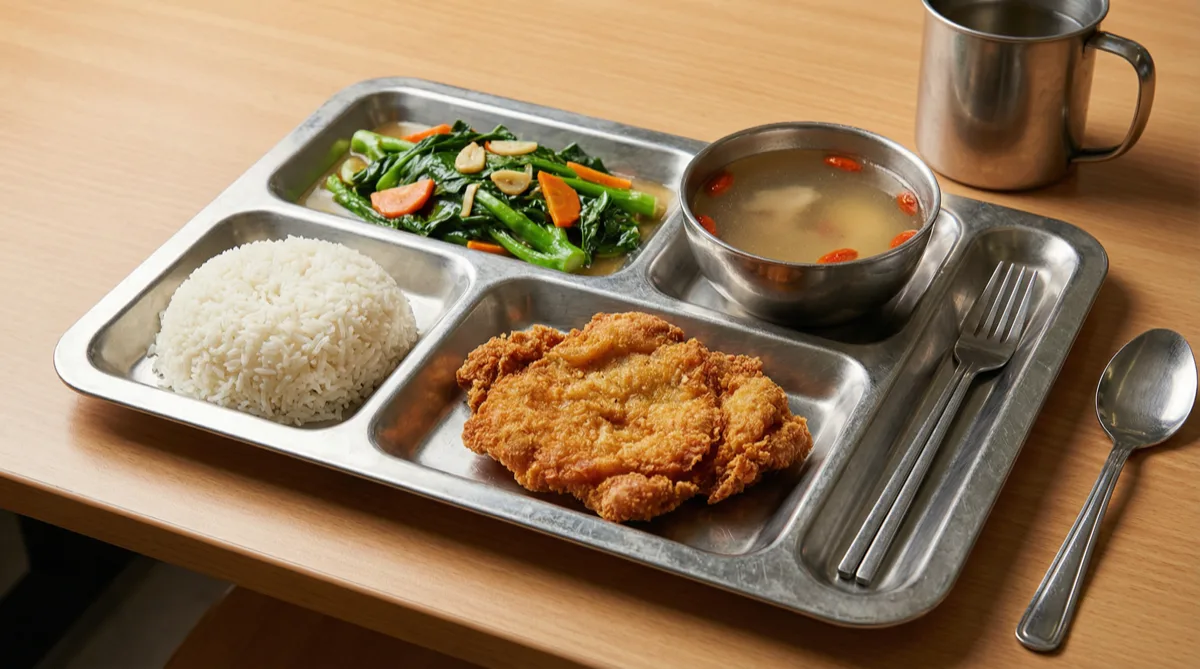
Quick version
- Treat cookhouse meals as training fuel, not a daily mood test.
- Eat enough even when the menu is average.
- Let camp meals save your energy and money instead of replacing them with constant snack spending.
Step 1: Treat cookhouse meals as fuel, not entertainment
This sounds obvious, but it changes how you eat.
In camp, meals do more than fill time. They affect:
- training energy
- recovery after PT or outfield activity
- mood
- whether you end up buying extra junk later because you under-ate earlier
Once you accept that cookhouse food is primarily there to keep you functional, you stop expecting restaurant variety and start making better tray decisions.
Step 2: Breakfast matters more than recruits expect
A lot of people under-eat at breakfast because they are still half asleep, the queue is moving fast, or the food is not exciting enough.
Then mid-morning becomes much worse than it needed to be.
The practical move is simple:
- eat enough carbs to start the day properly
- take some protein if available
- drink enough fluids early
You do not need a perfect meal. You just need to avoid beginning the day already under-fuelled.
Step 3: The best lunch and dinner strategy is boring and effective
When looking at a standard tray, do not overcomplicate it.
Aim for:
- a solid base of rice or other main carbohydrate
- enough protein to support training and recovery
- vegetables even if they are not the star of the show
The people who struggle most with cookhouse food are often doing one of two things:
- eating too little because the meal is not their favourite
- eating only the part they like and ignoring everything else
That is how you end up hungry again fast.
Step 4: Some meals will be good, some will be average, and that is normal
Every camp has the usual conversations:
- "Western day is the best"
- "this one damn bad"
- "last week's menu better"
That is part of NSF culture. Fine. But if you let meal mood decide whether you eat properly, you are giving too much power to one average lunch.
The smarter mindset:
- enjoy the better meals when they happen
- do not mentally collapse when the menu is just okay
- keep the overall week consistent
Camp eating gets much easier when you stop needing every meal to feel like a reward.
Step 5: If training is heavy, recovery eating matters
Cookhouse food becomes most valuable when your body is already tired.
After PT, route marches, or high-tempo days, many recruits feel too exhausted to care. That is exactly when eating enough matters more.
Do not make these common mistakes:
- skipping part of the meal because you are too shag
- buying only sugary snacks later instead of eating the actual meal
- treating hydration like an afterthought
A tired body makes bad food decisions. Try not to let that happen on autopilot.
If you know you tend to lose appetite when tired, make the decision before the meal starts: finish the core parts first, then decide whether you still want extras later.
Step 6: Cookhouse frustration is usually about routine, not one meal
Most people do not get annoyed because of one bad dinner. They get annoyed because the overall routine starts feeling repetitive.
What helps:
- keeping expectations realistic
- avoiding overdependence on canteen food as your "real food"
- recognising that consistency beats occasional indulgence
If you treat canteen runs or delivery food as the only enjoyable meals, your wallet starts taking hits very quickly.
Step 7: The cookhouse can actually make NSF life easier
This is the part many people appreciate only later.
Cookhouse food may not always be exciting, but it removes a huge decision burden:
- you do not need to plan every meal
- you do not need to pay for most of your weekday food
- the meal rhythm is already built into camp life
That structure matters. Once you stop fighting it emotionally, it becomes a real advantage.
The most useful cookhouse mindset
If you want the short version, use this:
- eat enough even when the meal is not amazing
- prioritise consistency over preference
- do not let snack spending replace proper meals
- use cookhouse food to support training and recovery, not just mood
That is the version that helps most in the long run.